
Why Most Local Businesses Are Invisible Online (And How to Fix It)
Boosting local SEO is how small businesses show up when nearby customers search for what they sell — on Google Search, Google Maps, and increasingly, AI-powered answer engines.
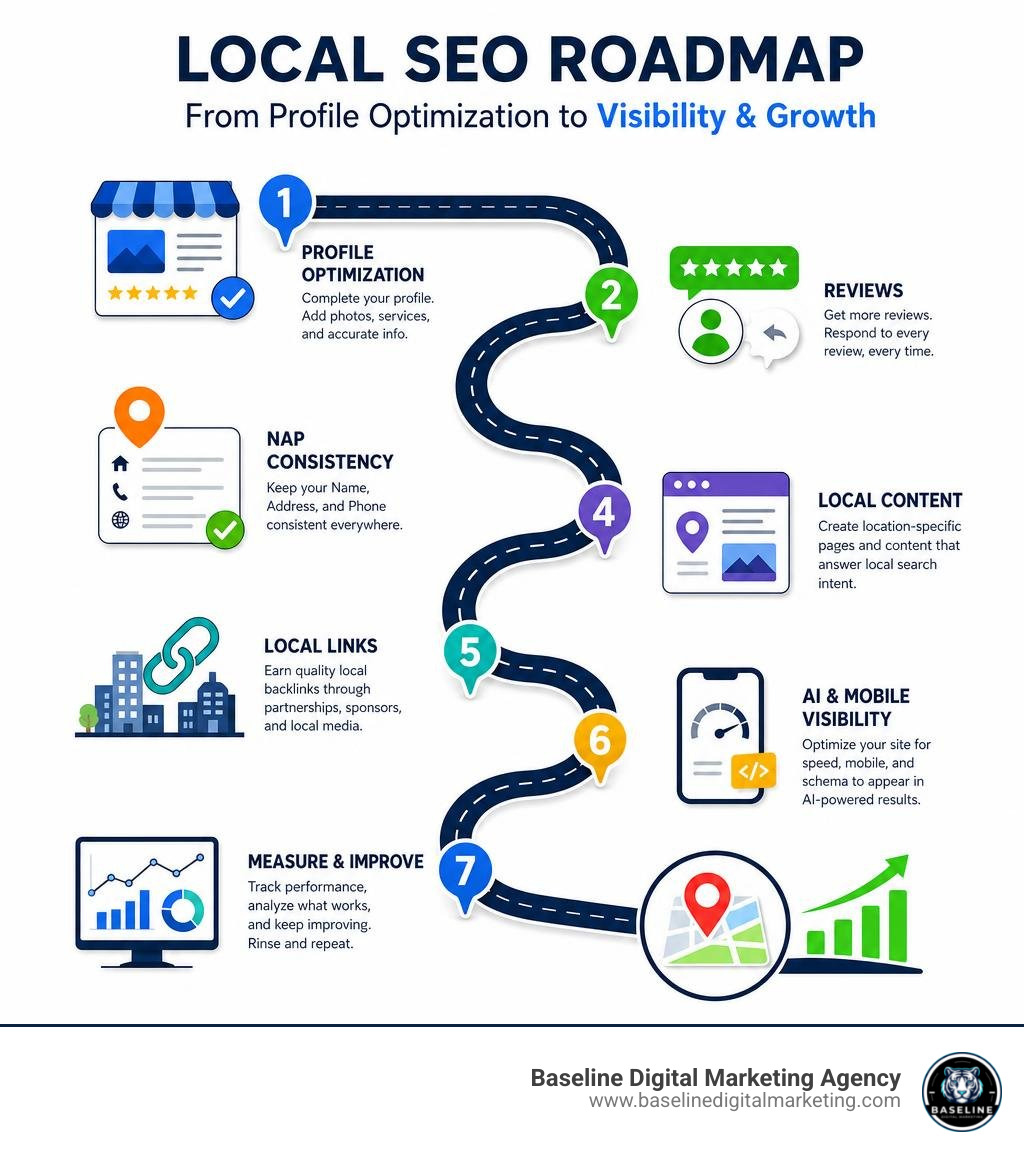
Here’s a quick overview of what actually moves the needle:
- Claim and optimize your Google Business Profile — complete every field, pick the right category, add photos weekly
- Build and respond to reviews — aim for consistent volume, recent dates, and 100% response rate
- Fix your NAP consistency — match your name, address, and phone number exactly across every directory
- Create location-specific website pages — target local keywords with unique content for each service area
- Earn local backlinks — sponsorships, community partnerships, and local media mentions
- Optimize for mobile and add schema markup — fast pages and structured data help both Google and AI tools
- Create direct-answer content — FAQ pages, pricing guides, and how-to posts that AI engines can cite
The numbers make the case clearly. According to recent research, 87% of consumers use Google to research local businesses, 57% of local searches happen on a smartphone, and 88% of local mobile searches result in a store visit or phone call within 24 hours. Yet most small business owners are still invisible in those results — not because they haven’t tried, but because they’re focused on the wrong things.
If you run a local business and your competitors keep showing up in search results while you don’t, this guide is for you. We’ll walk through every major piece of the puzzle — from your Google Business Profile to AI search visibility — in plain language, with clear steps you can act on today.
I’m Carlos Alvarez, founder and CEO of Baseline Digital Marketing, and I’ve helped businesses cut through the noise of digital marketing — including boosting local SEO — by focusing on strategies that drive real, measurable growth. Let’s get into it.
Local SEO Basics: Why Neighborhood Visibility Turns Searches Into Customers
Local SEO is the process of improving your online presence so nearby customers can find, trust, and contact your business when they search locally.
That includes searches like:
- “best accountant near me”
- “emergency plumber open now”
- “family dentist accepting new patients”
- “web design agency for small business”
- “coffee shop with Wi-Fi”
Local SEO matters because local searches usually come with intent. People are not casually browsing. They are comparing options, reading reviews, checking hours, asking for directions, or calling. Research shows that 98% of people read online reviews for local businesses, and local searches lead to purchases about 50% of the time.
In short: local SEO turns online visibility into real-world action.
If you want a broader foundation before going deeper, our A-Z Guide to SEO Services explains how local SEO fits into the bigger search strategy.
What Local SEO Actually Includes
Local SEO is not one magic switch. It is more like a neighborhood popularity contest where Google is the judge, your customers are the jury, and your website is trying not to wear sweatpants to court.
The main pieces are:
- Google Business Profile optimization
- Local website pages
- Local keyword research
- Reviews and review responses
- Citations and NAP consistency
- Local backlinks
- Mobile user experience
- Schema markup
- Service area signals
- Location or neighborhood pages
- Community mentions and engagement
Your Google Business Profile helps you show up in Google Maps and the Local Pack. Your website helps you rank in organic search. Reviews build trust. Citations confirm your business data. Links and mentions build authority.
How Google Decides Who Shows Up Locally
Google explains local rankings using three main factors: relevance, distance, and prominence. You can read the official explanation in Google’s local ranking guidance.
Here is what those mean in plain English:
- Relevance: Does your business match what the searcher wants?
- Distance: How close are you to the searcher or searched location?
- Prominence: How trusted, known, and well-reviewed is your business?
Google looks at your categories, services, business information, reviews, website content, backlinks, citations, and user behavior. If someone searches from a phone, proximity matters a lot. If two businesses are nearby, the one with stronger reviews, better information, and more authority often wins.
The Key Local Ranking Factors to Prioritize in 2026
As of June 2026, the biggest mistake we see is treating every local SEO task equally. They are not equal.
Start with the highest-impact areas first:
- Google Business Profile signals
- Review quality, quantity, and recency
- Website local relevance
- Mobile speed and usability
- Local links and mentions
- Citation accuracy
- Behavioral signals like calls, clicks, and direction requests
- AI visibility and entity trust
For a deeper breakdown of ranking signals, see this useful local SEO ranking factors resource.
| Search Surface | What It Shows | Main Ranking Influences | Best Optimization Moves |
|---|---|---|---|
| Google Local Pack | Map results with 3 local businesses | GBP, proximity, reviews, categories, prominence | Complete GBP, earn reviews, add photos, fix NAP |
| Local Organic Results | Website pages below or near map results | On-page SEO, content, links, technical SEO | Build local pages, improve speed, add schema |
| AI Local Recommendations | AI-generated answers and summaries | Trusted sources, reviews, citations, structured content | Create FAQs, answer pages, keep data consistent |
Boosting Local SEO With Google Business Profile, Reviews, and Citations

Your Google Business Profile is the front door of local SEO. If it is incomplete, outdated, or sloppy, Google has less confidence in your business. So do customers.
A complete profile helps you appear in Maps, Search, and the Local Pack. It also gives customers quick access to your phone number, website, hours, services, reviews, photos, products, booking links, and directions.
For a more technical implementation view, this Google Maps and Local Pack guide is a helpful companion.
Claim, Verify, and Complete Every Core Field
First, claim and verify your Google Business Profile. Then complete every field that applies to your business.
Prioritize these fields first:
- Business name
- Address or service area
- Phone number
- Website URL
- Primary category
- Secondary categories
- Business hours
- Holiday hours
- Services
- Products, if applicable
- Business description
- Photos
- Attributes
- Booking or appointment links
- Messaging, if you can respond quickly
- Q&A
- Posts
Your business name should match your real-world name. Do not stuff keywords into it. “Smith Family Dental” is fine if that is your name. “Smith Family Dental Best Dentist Emergency Implants Near Me” is not fine. Google does not need your business name to look like a Craigslist headline from 2009.
For service-area businesses, use your real service areas and follow Google’s rules about hiding your address when customers do not visit you there.
Boosting Local SEO With Review Management That Builds Trust
Reviews are one of the most visible trust signals in local search. They influence rankings, clicks, calls, and conversions.
Research shows that 98% of people read online reviews for local businesses. That means your reviews are not just “nice to have.” They are often the deciding factor.
A strong review strategy includes:
- Asking happy customers for reviews soon after service
- Using simple SMS or email review requests
- Responding to every review
- Mentioning the service naturally in responses
- Handling negative reviews professionally
- Avoiding fake reviews
- Avoiding review gating
Review gating means only asking happy customers to review you while filtering unhappy customers away from public platforms. Do not do it. It can violate platform guidelines and damage trust.
The goal is steady review velocity. A few real reviews every month is better than a suspicious spike followed by silence.
When responding to negative reviews, stay calm. Thank the reviewer, acknowledge the concern, and offer a way to resolve it offline. Future customers are watching how you respond.
Clean Up Citations Before They Confuse Google
Citations are mentions of your business information across the web. Your NAP means:
- Name
- Address
- Phone number
Google uses citations to confirm that your business is real and that your information is consistent.
Check major platforms like:
- Google Business Profile
- Apple Maps
- Bing Places
- Yelp
- Industry directories
- Local directories
- Data aggregator networks
Look for:
- Old phone numbers
- Incorrect addresses
- Duplicate listings
- Misspelled business names
- Outdated hours
- Wrong website links
Citations may not be as powerful as reviews or GBP signals, but bad citations can still create confusion. Clean them up, then maintain them. It is not glamorous, but neither is flossing. Both prevent bigger problems later.
Turn Your Website Into a Local Ranking Asset

Your website is where local SEO becomes more than a map listing. It lets you explain services, answer questions, show proof, target specific searches, and convert visitors into leads.
A strong local website includes:
- Local service pages
- Location or service-area pages
- Clear calls-to-action
- Click-to-call buttons
- Contact forms
- Directions or service area details
- Reviews or testimonials
- Local photos
- FAQ sections
- LocalBusiness schema
- Fast mobile performance
If you sell online and locally, our Ecommerce SEO Audit Checklist can help you evaluate product pages, technical issues, and conversion paths.
Boosting Local SEO With Local Keywords and Location-Specific Pages
Local keyword research starts with how customers actually search.
Use patterns like:
- Service + city
- Service + neighborhood
- Service + “near me”
- Best + service + area
- Emergency + service + area
- Open now + business type
Examples:
- “roof repair near me”
- “small business accountant”
- “wedding photographer in my area”
- “same day HVAC repair”
Create dedicated pages when there is real search demand and real business value. But avoid thin city-swap pages. A page that says the same thing 40 times with different place names is not a strategy. It is digital wallpaper.
Good location-specific pages include:
- Unique service details
- Local FAQs
- Photos from actual work or customers
- Relevant testimonials
- Driving or service area context
- Embedded map when appropriate
- Clear NAP information
- Internal links to related services
If you serve multiple areas, build pages around real differences, not fake offices. This guide on building local SEO outside a core location offers helpful context.
Mobile, Technical SEO, and Schema for Local Search
Most local search happens on mobile, and 57% of local searches come from smartphones or tablets. If your mobile site is slow, hard to read, or annoying to use, customers leave.
Focus on:
- Responsive design
- Fast page speed
- Core Web Vitals
- HTTPS
- Crawlable pages
- Indexable content
- Clean navigation
- Large tap targets
- Click-to-call buttons
- Short forms
- Clear headings
Schema markup helps search engines and AI systems understand your business. Useful schema types include:
- LocalBusiness
- Organization
- Service
- FAQPage
- Review, when used correctly
- BreadcrumbList
Add your NAP to your footer and make sure it matches your Google Business Profile. You can also embed a map on relevant location pages.
For more on mobile visibility, read Don’t Let Your Mobile Rankings Go South.
Internal Links and Conversion Paths for Nearby Customers
Internal links help Google understand your site structure and help customers find the next step.
Link between:
- Homepage
- Main service pages
- Location pages
- Blog posts
- FAQ pages
- Contact page
- Booking page
Use descriptive anchor text. Instead of “click here,” use “schedule a local SEO consultation” or “view our website design services.”
Your conversion paths should be obvious:
- Call button
- Contact form
- Appointment link
- Directions
- Quote request
- Chat or messaging option
If people have to hunt for your phone number, you are making them work too hard. And nobody wants homework from a plumber, dentist, or marketing agency.
Our Internal Linking Audit explains how to uncover hidden opportunities inside your existing website.
Build Local Authority Through Backlinks and Community Engagement
Local authority comes from being visible and trusted in your community. Google looks for signals that real people, organizations, and websites recognize your business.
That includes backlinks, brand mentions, local press, sponsorships, events, and partnerships.
Earn Links From Real Local Relationships
The best local links usually come from real relationships, not mass outreach.
Look for opportunities from:
- Local publications
- Supplier websites
- Partner pages
- Sponsorship pages
- Charity events
- School fundraisers
- Business associations
- Neighborhood blogs
- Local resource guides
- Podcast interviews
- Expert quote requests
A link from a relevant local organization can be more useful than a generic link from an unrelated website. Local relevance matters.
Good local link building is simple: be worth mentioning, then make it easy for people to mention you.
Expand Visibility Outside Your Core Location Without Looking Spammy
If you serve nearby areas, you can build visibility there without creating spam.
Do:
- Create useful service-area pages
- Explain your actual service coverage
- Add unique FAQs for each area
- Include real project examples when possible
- Use testimonials from customers in that area
- Mention travel time or service logistics
- Add Service schema where appropriate
Do not:
- Create fake offices
- Use virtual addresses that violate guidelines
- Publish duplicate city pages
- Claim areas you do not actually serve
- Stuff place names into every paragraph
If you do not have a public storefront, this guide on local SEO without a physical address explains important considerations for service-area businesses.
Use Community Engagement to Improve Reviews, Links, and Content
Community involvement can support local SEO in three ways:
- It gives people a reason to talk about you.
- It creates natural link and mention opportunities.
- It gives you local content ideas.
Turn real activity into useful content:
- Event recaps
- Customer stories
- Before-and-after projects
- Seasonal local guides
- Neighborhood spotlights
- Local statistics
- Community photos
- FAQs from real customers
This also supports E-E-A-T: experience, expertise, authoritativeness, and trustworthiness. In plain English, show that you know your work and your community.
AI Search, Timelines, Costs, and Your 90-Day Plan for Boosting Local SEO
AI search is changing how people discover local businesses. Google AI Overviews, AI assistants, and answer engines can summarize options before a user clicks anything.
That does not mean traditional SEO is dead. It means your business information needs to be clear, consistent, and easy for machines to understand.
For a deeper look at Generative Engine Optimization, see this GEO local business playbook.
How AI Overviews and Answer Engines Are Changing Local Discovery
AI systems pull from many sources:
- Your website
- Google Business Profile content
- Reviews
- Directory listings
- Local media
- Third-party mentions
- Structured data
- FAQs
- Fresh content
AI tools do not just look for keywords. They look for confidence. If your business information is inconsistent, your reviews are thin, and your website does not answer real questions, AI systems have less reason to recommend you.
This is why local SEO and AI visibility now overlap. Clean data, strong reviews, useful content, and trusted mentions help both.
Create Direct-Answer Content That AI Can Cite
Direct-answer content is written to answer specific customer questions clearly.
Examples include:
- “How much does this service cost?”
- “How long does an appointment take?”
- “Do you serve my area?”
- “What should I do before scheduling?”
- “What is the difference between option A and option B?”
- “Do you offer emergency service?”
Best practices:
- Use question-based headings
- Answer the question in the first few sentences
- Add details below the short answer
- Include updated dates
- Use named authors when possible
- Add FAQ schema
- Cite real experience
- Keep content fresh
This is not about writing robotic content. It is about being helpful fast. AI likes that. Customers do too.
Realistic Timelines, Costs, and KPIs for Local SEO Results
Local SEO is not instant, but it is measurable.
Typical timeline:
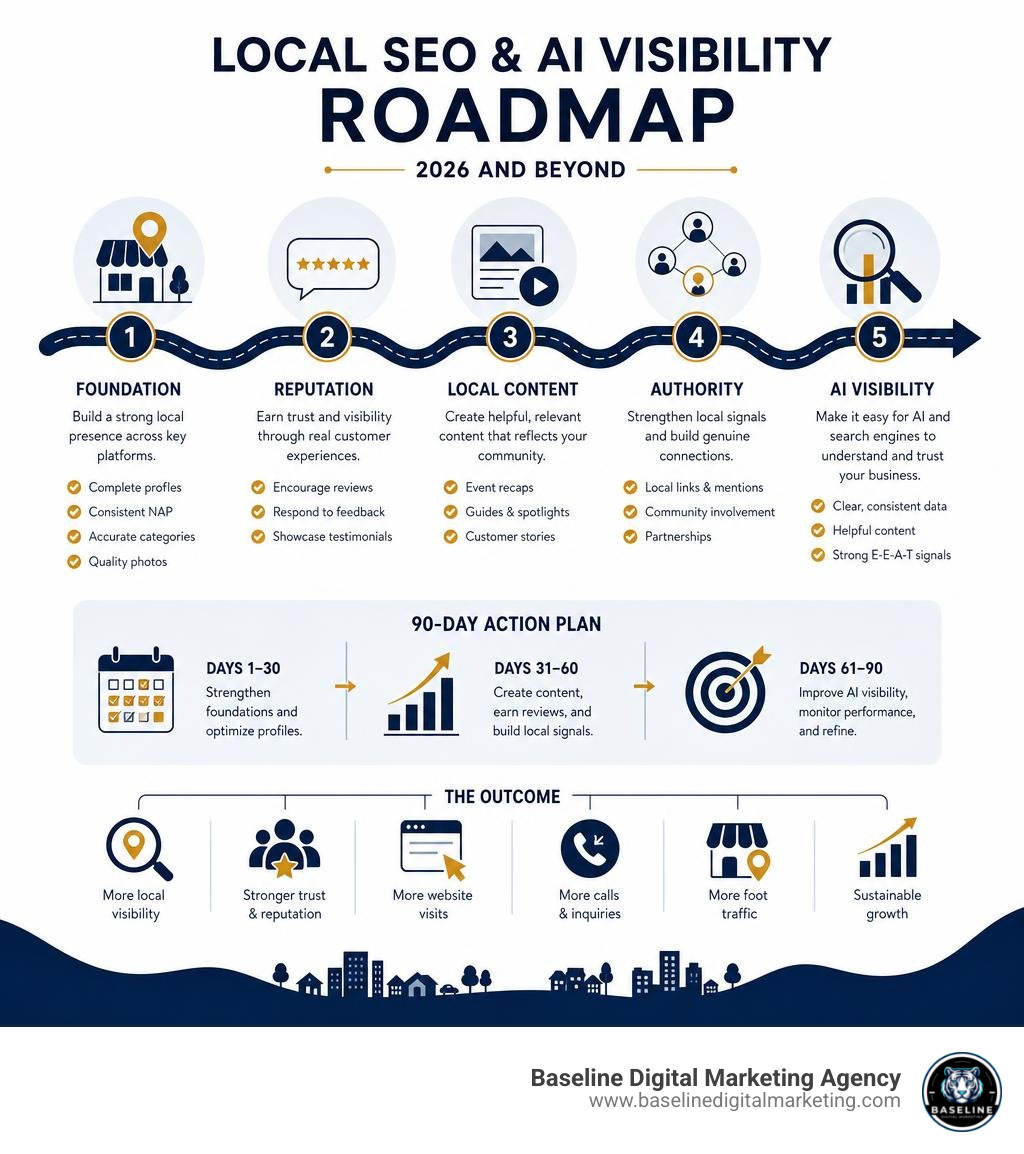
- First 30 days: Fix profile, citations, tracking, and technical basics
- Days 31-60: Build reviews, publish local pages, improve mobile UX
- Days 61-90: Earn local links, expand content, monitor ranking movement
- 3-6 months: Meaningful ranking, traffic, and lead improvements often appear
- 6-12 months: Compounding gains from reviews, content, links, and authority
Costs vary based on competition and how much work is needed.
Common budget ranges:
- DIY: mostly free, plus tools or citation services
- Lean local campaign: a few hundred dollars per month in tools or support
- Professional local SEO: often $750 to $3,000+ per month depending on scope
- Competitive or multi-location SEO: higher due to content, links, reporting, and management
Track KPIs like:
- Google Business Profile views
- Calls
- Direction requests
- Website clicks
- Form leads
- Local rankings
- Review count and rating
- Review response rate
- Citation accuracy
- Mobile speed
- Organic local traffic
- AI mention visibility
90-day local SEO milestones:
- Days 1-7: Claim GBP, confirm NAP, install tracking
- Days 8-14: Complete GBP fields, add photos, choose categories
- Days 15-30: Fix citations, respond to reviews, improve key pages
- Days 31-45: Publish local service pages and FAQs
- Days 46-60: Improve mobile speed and add schema
- Days 61-75: Start local link outreach and community mentions
- Days 76-90: Review KPIs, refresh content, expand what is working
Common Local SEO Mistakes That Slow Results
Avoid these common mistakes:
- Keyword-stuffed business names
- Wrong primary category
- Stale photos
- Inconsistent NAP
- Duplicate listings
- Fake reviews
- Review gating
- Thin city pages
- Slow mobile site
- Missing schema
- Ignored negative reviews
- Overly broad service areas
- No tracking
The biggest mistake? Doing random tactics without a strategy. Local SEO works best when every piece supports the others.
Frequently Asked Questions About Boosting Local SEO
How Long Does Local SEO Take to Show Results?
You can often see early wins in 30 to 90 days, especially from Google Business Profile improvements, citation cleanup, and review activity.
Meaningful results usually take 3 to 6 months. Competitive markets can take longer. Local SEO compounds as your reviews grow, pages get indexed, citations stabilize, and links build authority.
Can a Business Rank Locally Without a Public Storefront?
Yes. Service-area businesses can rank locally without showing a public address, but they need to follow Google Business Profile guidelines.
Important steps include:
- Hide your address if customers do not visit you there
- Define accurate service areas
- Build strong service-area pages
- Earn reviews from real customers
- Keep citations consistent
- Add ServiceArea or LocalBusiness schema
- Avoid fake locations
You do not need a public storefront to build trust, but you do need clear signals that your business is legitimate and active.
What Should a Small Business Do First With a Limited Budget?
Start with the work that costs little but matters a lot:
- Claim and complete your Google Business Profile
- Ask happy customers for reviews
- Respond to every review
- Fix NAP issues on major directories
- Make your website mobile-friendly
- Add local keywords to key pages
- Add basic schema markup
- Publish one helpful FAQ or service page per month
- Upload fresh photos weekly
- Build one local relationship that can lead to a mention or link
If you have a small budget, do not waste it on shiny tools before fixing the basics.
Conclusion
Boosting local SEO is not about tricking Google. It is about making your business easy to find, easy to trust, and easy to contact.
Start with your Google Business Profile. Build steady reviews. Clean up your citations. Improve your website. Earn local links. Create helpful content that answers real questions. Then measure what happens and keep improving.
At Baseline Digital Marketing Agency, we help businesses grow their online presence through digital strategy, SEO, AI automation, websites, and branding. If you want visibility across Google, Maps, AI search, and beyond, explore our Search Everywhere Optimization approach.
Your neighborhood is already searching. Let us help them find you.