Why Brand Identity for Real Estate Is Your Secret Weapon
Brand identity for real estate is the complete set of visual, verbal, and emotional signals that shape how buyers, investors, and renters perceive a property or agent — before they ever make contact.
Here’s a quick breakdown of what it means and why it matters:
| Element | What It Means in Real Estate |
|---|---|
| Visual identity | Logo, colors, fonts, and photography style |
| Messaging | Tagline, brand voice, and value proposition |
| Emotional connection | The feeling a brand creates in buyers and investors |
| Experiential branding | Showrooms, VR tours, and digital touchpoints |
| Consistency | Same look and message across every channel |
Real estate is one of the largest purchases most people will ever make. That means trust is everything. And trust is built — or lost — long before a showing is scheduled.
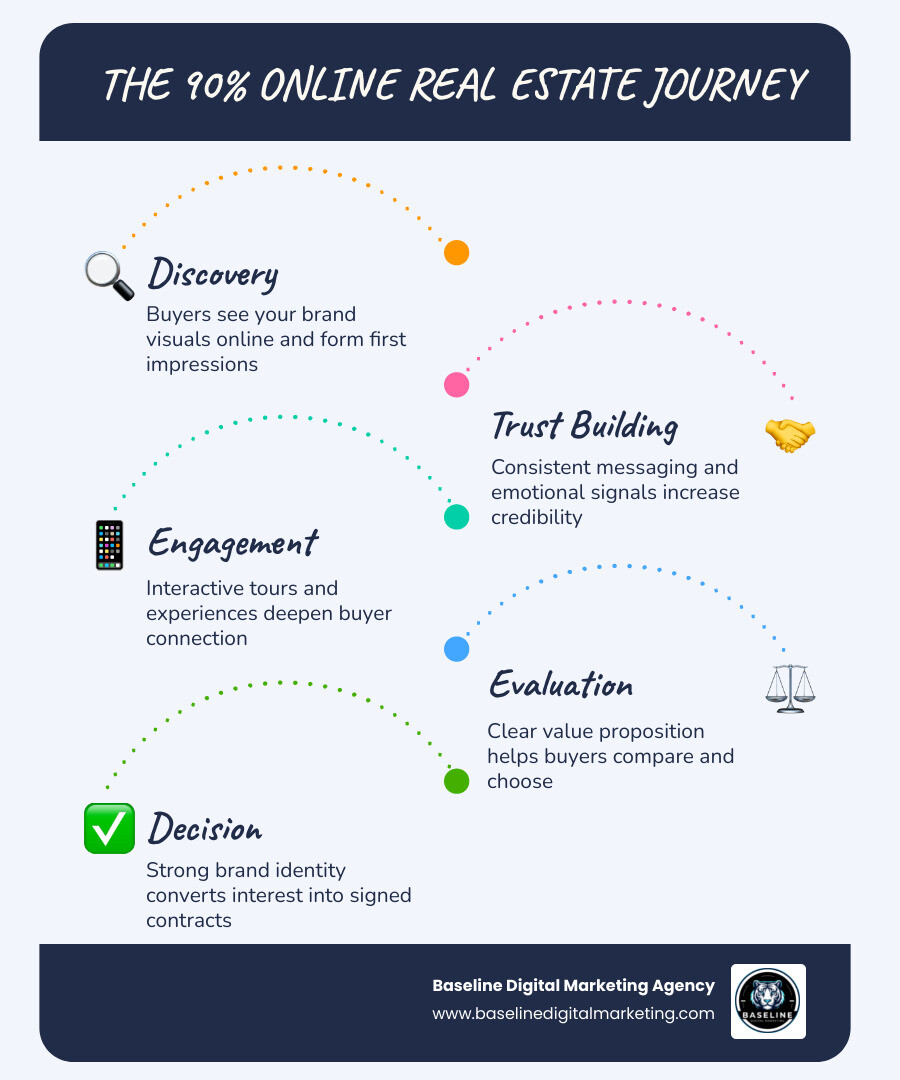
Consider this: 90% of home buyers begin their search online. Their first impression of a property or agent isn’t a handshake. It’s a logo, a website, a social media post, or a listing photo. If those signals feel inconsistent or generic, buyers move on.
Strong branding changes that. It positions a development or agent as the obvious choice in a crowded market — not just through aesthetics, but through a clear story that resonates with the right audience.
I’m Carlos Alvarez, founder of Baseline Digital Marketing Agency, and I’ve spent my career helping businesses build the kind of brand identity for real estate and other high-stakes industries that drives real, measurable growth. In the sections below, I’ll walk you through exactly how to build — or sharpen — a brand that works as hard as you do.
Defining Brand Identity for Real Estate Beyond the Logo
When we talk about brand identity for real estate, people often think we just mean a pretty logo or a specific shade of blue. While those are parts of the puzzle, the true identity is much deeper. It is the “gut feeling” a person has about your business or project.
In the high-stakes world of May 2026, where digital saturation is at an all-time high, your brand identity is your market positioning. It’s the way you differentiate a luxury high-rise from a mid-market family development. It’s about credibility—showing that you aren’t just another developer or agent, but a trusted partner in one of the most significant financial decisions of a client’s life.
A strong brand identity communicates your value proposition instantly. It answers the question, “Why should I choose you over the ten other listings I just scrolled past?” Long-term recognition is the goal here. Think of iconic brands like RE/MAX; their hot air balloon logo is instantly recognizable across the globe, signaling a specific standard of service. Whether you are building a corporate brokerage brand or a specific project identity, you need a cohesive brand strategy to ensure every touchpoint reinforces that central promise.
Crafting a Visual Brand Identity for Real Estate
Visuals are the “face” of your brand. In real estate, which is a highly visual industry, your design choices speak volumes before a single word is read. Current data shows that 70% of luxury brands opt for geometric sans serif fonts. Why? Because they evoke a sense of structure, modernity, and premium quality. Fonts like Proxima Nova or Avenir provide a clean, innovative feel that resonates with today’s design-conscious buyers.
Color psychology is another heavy hitter. We’ve moved past the days where every real estate brand had to be navy blue. Modern, sophisticated palettes are taking over. For instance, recent industry shifts have seen successful firms move toward “earthy” yet premium tones like carbon, sage, linen, and white. These colors feel approachable yet expensive.
Consistency is the glue that holds these visuals together. If your Instagram looks like a lifestyle magazine but your business cards look like they were printed in 1995, you lose trust. A professional creative brand design ensures that your typography, imagery, and color palette are unified across every platform.

The Role of Emotional Connection in Property Sales
Logic makes people think, but emotion makes them act. A house is a structure, but a “home” is an emotional sanctuary. A strong brand identity for real estate bridges the gap between a floor plan and a lifestyle.
For investors, the emotional connection is often rooted in confidence and legacy. For buyers, it’s about the narrative of their future life. When a brand tells a story—perhaps of a neighborhood’s transformation or a commitment to sustainable living—it creates a “hook” that stays with the buyer long after the viewing. Research has shown that branding builds long-term value by creating a perception of quality that justifies premium pricing. When people feel a connection to a brand, they are less likely to haggle over price and more likely to see the long-term benefit of the investment.
The Core Pillars of a Modern Real Estate Brand
To build a brand that stands the test of time in 2026, we focus on three core pillars: the visual system, messaging, and experiential branding.
- Visual System: This includes your logo, but also your graphic motifs and photography style. We often recommend “lifestyle” photography—showing people actually enjoying the space—rather than just empty, sterile rooms.
- Messaging: This is your brand voice. Is it formal and authoritative, or warm and conversational?
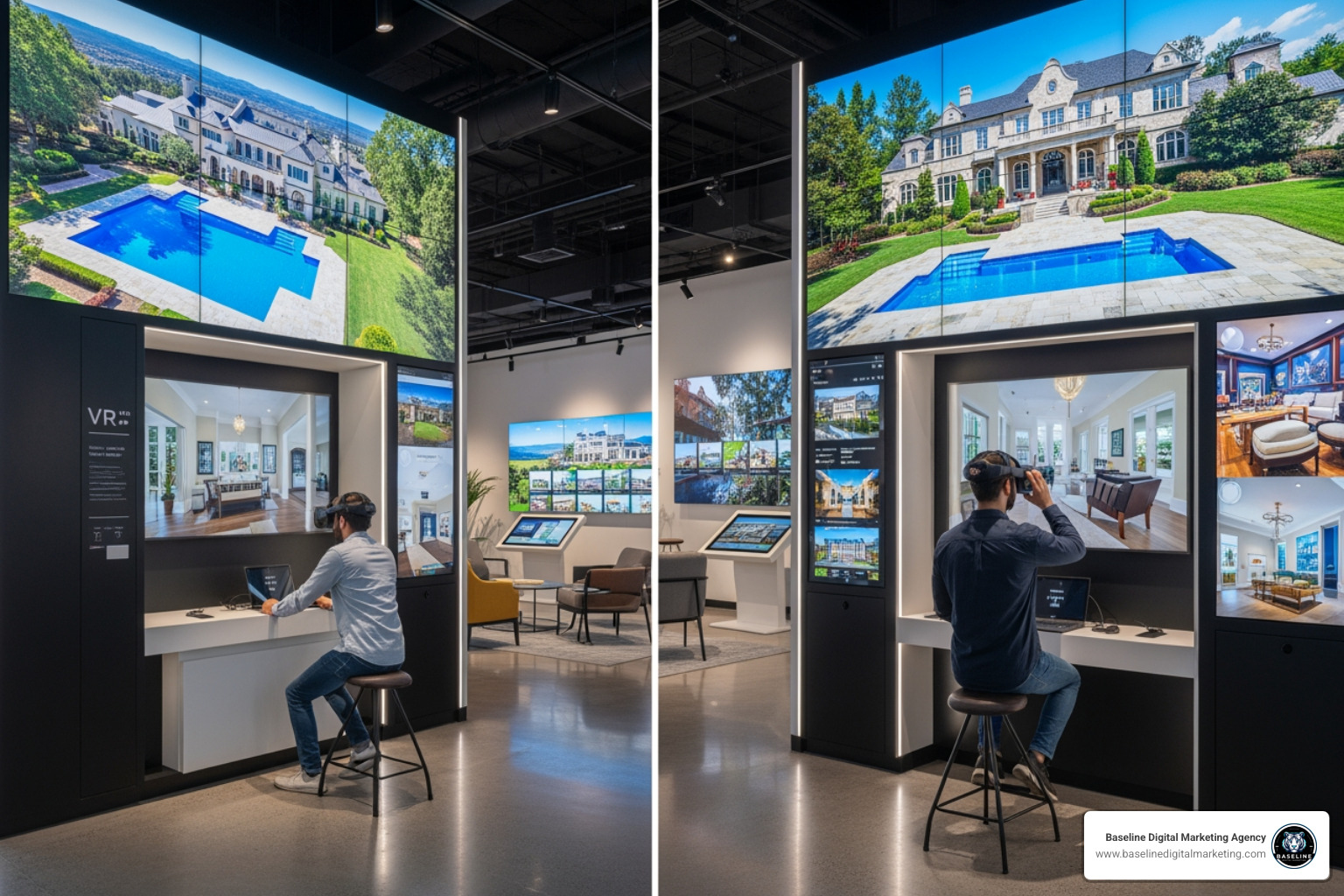
- Experiential Branding: This is where the brand comes to life. In the modern market, this includes immersive showrooms and AR/VR tours.
Imagine a potential buyer sitting in their current home, putting on a VR headset, and walking through a development that hasn’t even been built yet. If that virtual experience is branded with the same colors, music, and “vibe” as your website, the brand becomes a reality in their mind. Our Branding Studio specializes in creating these multi-dimensional identities that exist in both the physical and digital worlds.
Storytelling and Messaging Strategies
Every property has a story. Maybe it’s a historic renovation that honors the past, or a cutting-edge smart home designed for the future. Your Unique Selling Proposition (USP) must be woven into a narrative that speaks to your target audience’s desires.
A great brand voice should be consistent. If you are targeting first-time millennial buyers, your voice might be “savvy” and direct, avoiding the overly theatrical “real estate speak” of the past. If you’re selling luxury estates, your voice should be refined and understated. The art of crafting compelling brand stories lies in finding the human element behind the bricks and mortar.
Personal Brand Identity for Real Estate Agents
For individual agents, the brand is the person. While you might work under a corporate brokerage umbrella, your personal brand is what wins the listing.
The key here is authenticity. Buyers can sense a “fake” persona from a mile away. Your personal brand identity for real estate should reflect your actual values and your impact on the community. Are you the agent who knows every local coffee shop owner? Are you the data nerd who can predict market shifts? Lean into that.
Professional headshots are non-negotiable, but they should feel modern—think natural lighting rather than the stiff, “arms-crossed” studio portraits of yesterday. Sharing your journey and client success stories on social media helps build that necessary trust. For more on this, check out these tips on building a strong personal brand as an agent.
How Strategic Branding Accelerates Sales and Investment
Branding isn’t just an “extra” cost; it’s a high-yield investment. The numbers back this up: over 90% of units in some major developments have sold within just two months following the implementation of a comprehensive new branding strategy.
Strategic branding gives you “pricing power.” This is the ability to charge a premium because the market perceives your product as higher value. A branded project feels safer, more prestigious, and more likely to appreciate in value compared to an unbranded competitor.
| Feature | Unbranded Project | Branded Project |
|---|---|---|
| Market Perception | Commodity / Price-driven | Lifestyle / Value-driven |
| Lead Quality | High volume, low intent | Targeted, high intent |
| Pricing Power | Market average | 5-15% Premium |
| Sales Velocity | Slower, depends on market | Faster, driven by demand |
A great example of this is the evolution of major luxury firms like Douglas Elliman, who recently partnered with creative agencies to modernize their century-old heritage. By refreshing their visual identity and digital presence, they ensured they remained the top choice for the modern luxury buyer, maintaining their position as a market leader.
Navigating 2026 Trends: Sustainability and Digital Immersion
As we move through 2026, two trends are dominating the brand identity for real estate landscape: sustainability and digital-first experiences.
Eco-Branding: Sustainability is no longer a “nice to have.” It is a defining factor for modern buyers. Branding your project as “green” or “carbon-neutral” requires more than a leaf icon; it requires a narrative of responsibility that is integrated into every piece of marketing.
Digital Immersion: With 47% of real estate professionals reporting that quality leads come from social media, your digital brand is often more important than your physical signage. This includes everything from Instagram filters that match your brand aesthetic to high-end video content.
We are also seeing a rise in “non-traditional” property branding. Some agencies are moving away from traditional real estate aesthetics entirely, opting for an editorial, lifestyle-magazine feel. This approach, exemplified by agencies like Something Great, uses conversational language and “imperfect” photography to feel more authentic and connected to younger demographics.
Frequently Asked Questions about Real Estate Branding
Why is brand identity more important than a logo?
A logo is just a symbol; brand identity is the entire experience. While a logo helps with recognition, the identity builds the trust and emotional connection required to close a multi-million dollar deal. It encompasses your voice, your values, and the way you treat your clients.
How does branding influence property pricing and value?
Branding creates “perceived value.” When a property is associated with a high-end, reputable brand, buyers are willing to pay more because they associate that brand with quality, status, and lower risk. It transforms a physical asset into an aspirational lifestyle.
What are the biggest branding mistakes real estate professionals make?
The most common mistake is inconsistency. Using different logos on your website and your yard signs creates confusion and erodes trust. Other mistakes include ignoring online reviews, excessive self-promotion (instead of providing value), and failing to define a clear target audience before starting the design process.
Conclusion
At Baseline Digital Marketing Agency, we believe that a strong brand identity for real estate is the foundation of every successful sale and development. When buyers start their journey on a smartphone, your brand must be clear, consistent, and compelling from the very first click.
Whether you are a developer looking to launch a new landmark or an agent aiming to become a household name in your city, our team is here to help you craft a strategy that drives long-term growth. From brand strategy to AI-driven marketing automation, we serve a wide variety of industries with one goal in mind: making your business the obvious choice.
Ready to turn your brand into your secret weapon? Start your project at our Branding Studio today and let’s build something iconic together.