What Is Local SEO (And Why It Matters for Your Business)?
Local SEO is the practice of optimizing your online presence so your business shows up when nearby customers search for what you offer.
Quick answer — what local SEO covers:
| Element | What It Means |
|---|---|
| Google Business Profile | Your free listing on Google Maps and Search |
| NAP Consistency | Your name, address, and phone number matching everywhere online |
| Local Citations | Directory listings that confirm your business exists |
| Reviews | Star ratings and written feedback that build trust and rankings |
| Location Pages | Web pages targeting specific cities or service areas |
| Local Keywords | Search terms tied to a place, like “plumber in Austin” |
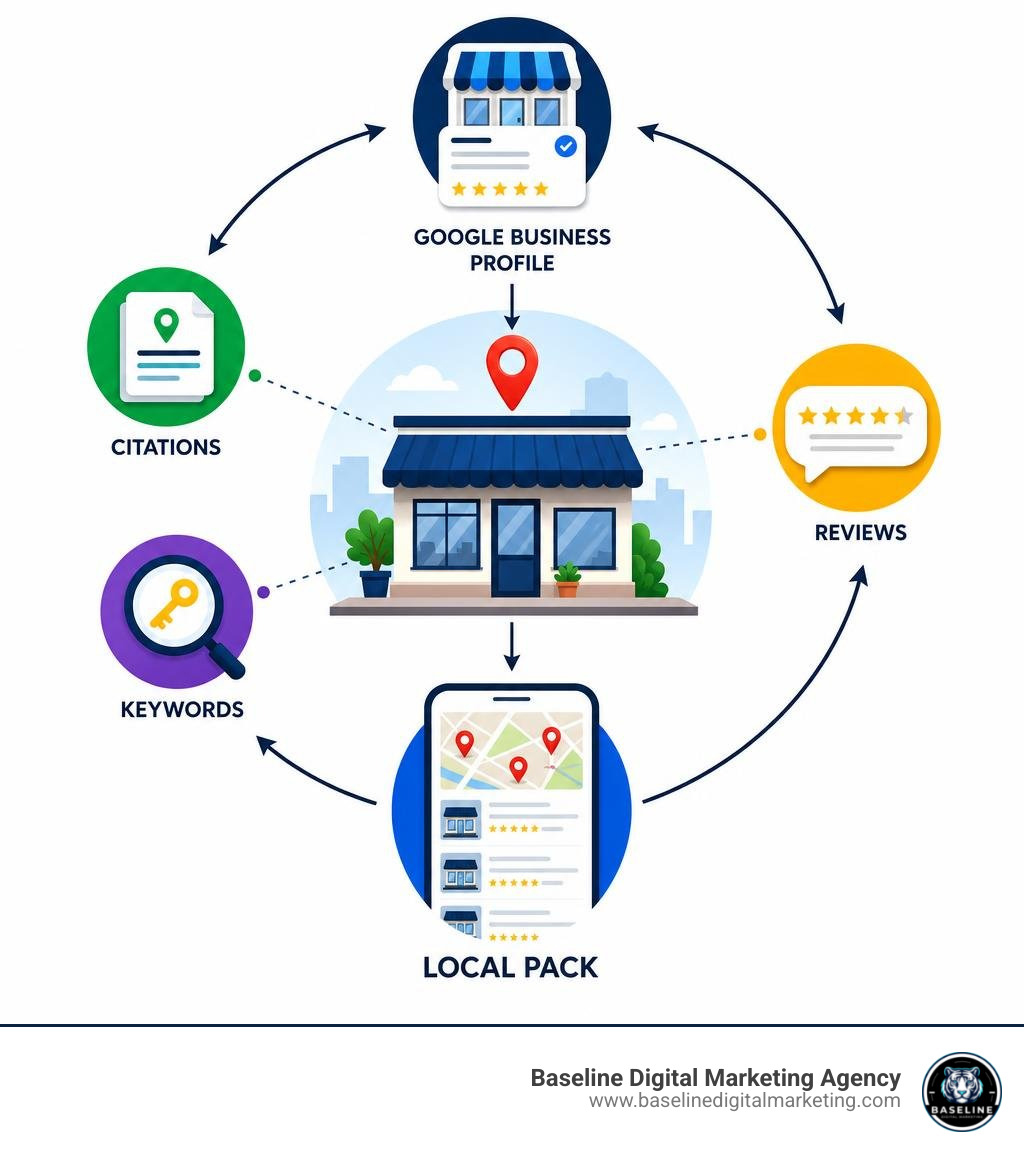
These six elements work together to tell Google who you are, where you are, and why you’re trustworthy.
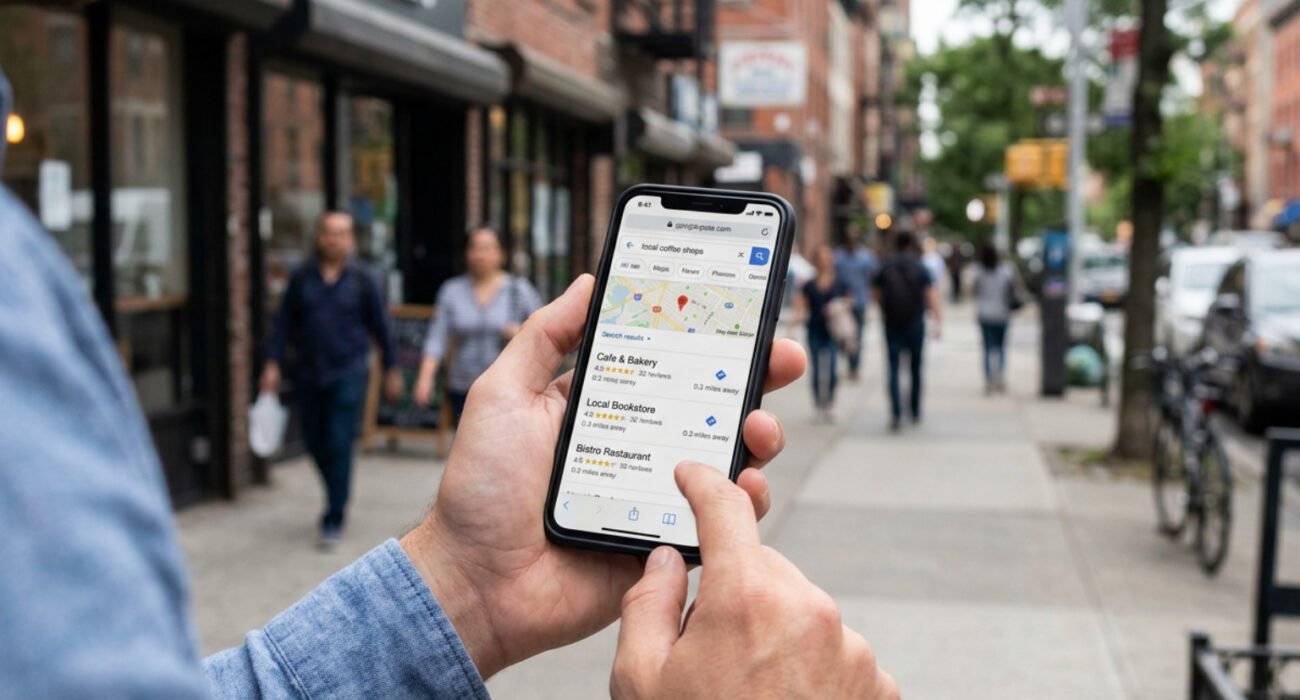
Here’s why this matters right now: 30% of all mobile searches are location-related, and 78% of people who search for something nearby visit a business within a day. That’s not a slow marketing funnel — that’s a customer who’s ready to buy, today.
Yet most small businesses are nearly invisible in those results. Not because they’re doing nothing, but because they’re optimizing the wrong signals.
I’m Carlos Alvarez, founder and CEO of Baseline Digital Marketing, and I’ve spent years helping businesses cut through the noise of local search and turn their online presence into a consistent source of new customers. In this guide, I’ll walk you through exactly how local SEO works in 2026 — and what you can do about it, step by step.
What is Local SEO and How Does It Work?
Local SEO helps businesses appear in search results tied to a real-world place, service area, or “near me” intent. It is especially important for companies that serve customers face-to-face, deliver services to a defined area, or want to be found on Google Maps.
A helpful way to think about it:
Traditional SEO asks, “Is this the best page for the topic?”
Local SEO asks, “Is this the best, closest, most trusted business for this searcher right now?”
Google can show local businesses in several places:
- Local Pack: The map section that usually shows three businesses near the top of the search results.
- Local Finder: The expanded list users see after clicking “View all” or opening more map results.
- Google Maps: Search results directly inside the Maps app or desktop Maps.
- Localized organic results: Traditional website results influenced by the searcher’s location.
For a deeper overview of the local search ecosystem, this guide to ranking in local search results is a useful reference.
And because local searches often happen on phones, mobile performance matters. Slow pages, hard-to-tap buttons, and messy mobile layouts can cost you leads. We covered this more broadly in our guide on protecting your mobile rankings.
Traditional SEO vs. Local Search
| Factor | Traditional SEO | Local SEO |
|---|---|---|
| Main goal | Rank pages for broader topics | Rank a business for local intent |
| Search intent | Informational, commercial, transactional | Nearby, urgent, service-area, visit-ready |
| Ranking surface | Organic results | Local Pack, Maps, Local Finder, organic |
| Location impact | Sometimes relevant | Extremely important |
| Key assets | Website pages, content, backlinks | Google Business Profile, reviews, citations, location pages |
| Trust signals | Links, content quality, authority | Reviews, proximity, NAP consistency, local links |
| Best for | National or broad visibility | Physical locations and service-area businesses |
Traditional SEO and local SEO overlap, but they are not the same job. A business can have a technically strong website and still struggle in Maps if its Google Business Profile is incomplete, reviews are weak, or citations are inconsistent.
The opposite can also happen: a business may rank in the Local Pack but have a thin website that fails to convert visitors. That is why we look at local SEO as a full ecosystem, not one isolated tactic.
How Google’s Local Algorithm Works
Google has publicly described three major local ranking pillars:
- Relevance: How well your business matches the search.
- Distance: How close your business is to the searcher or searched location.
- Prominence: How well-known, trusted, and authoritative your business appears online.
Distance is the part you cannot fully control. If someone searches from across town, Google may favor businesses closer to that person. That is why there is no single universal “number one” local ranking. Rankings can change block by block.
Relevance and prominence, however, are where strategy matters. Google uses signals such as your categories, services, reviews, website content, links, citations, hours, photos, and user behavior to decide whether your business deserves visibility.
For example, if your profile clearly lists a service, your website has a strong page for that service, your reviews mention that service naturally, and other trusted websites reference your business, Google has more confidence in showing you.
Core Ranking Factors and Google Business Profile Optimization
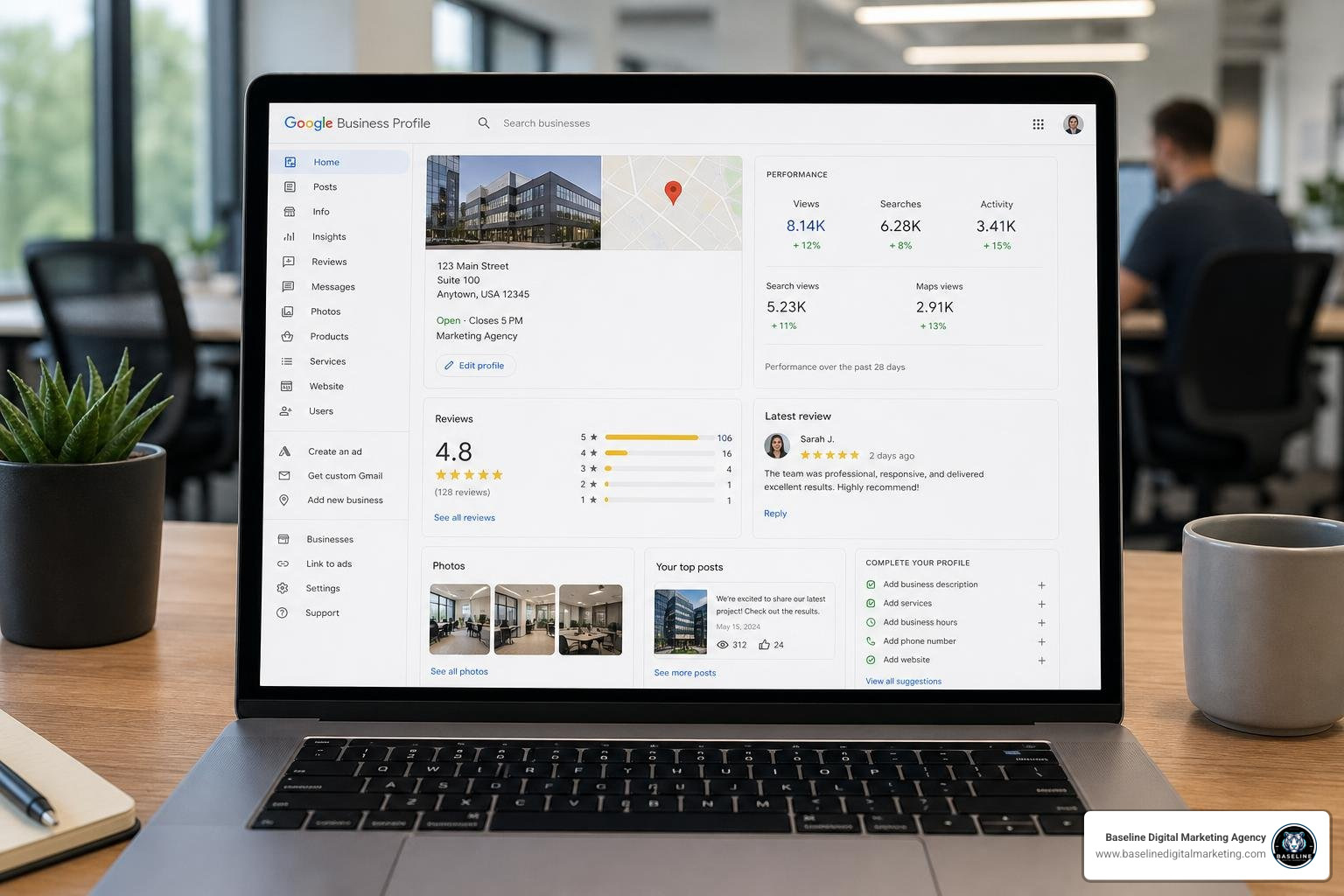
Your Google Business Profile is one of the most important assets in local search. Industry surveys consistently place GBP signals near the top for Local Pack visibility, with reviews, on-page signals, links, and citations also playing major roles.
A useful 2026 breakdown of local ranking factors can be found in this local SEO ranking factors guide. The exact weight of each signal varies by industry and market, but the priority order is clear: start with the assets Google uses most directly.
If you are building a broader search foundation, our A-Z guide to SEO services explains how local SEO fits into a bigger growth strategy.
The Core Ranking Factors of Local SEO
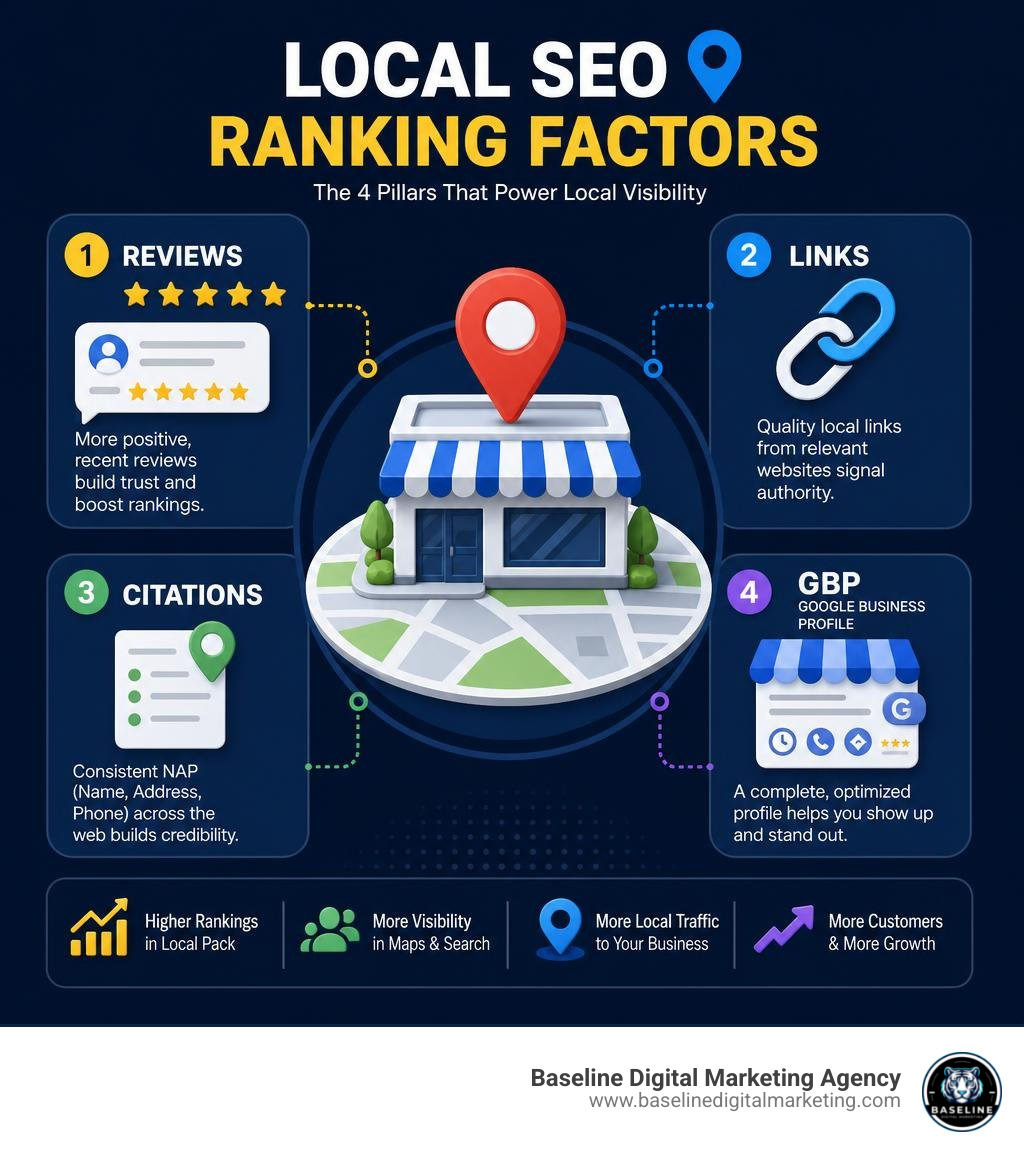
Here are the major signal groups we pay attention to:
Google Business Profile signals
- Primary category
- Secondary categories
- Services and products
- Business hours
- Photos
- Attributes
- Profile completeness
Review signals
- Average rating
- Review volume
- Review recency
- Review velocity
- Keywords customers naturally use
- Owner responses
On-page SEO signals
- Location pages
- Service pages
- Title tags and headings
- NAP information
- Internal links
- Schema markup
Link signals
- Local backlinks
- Industry-relevant backlinks
- Mentions from trusted organizations
- Community partnerships
Citation signals
- Directory listings
- Data aggregator consistency
- NAP accuracy
- Duplicate listing cleanup
Behavioral signals
- Clicks
- Calls
- Direction requests
- Website visits
- Engagement with your profile
One important note: citations still matter, but they are not magic. In 2026, mass directory submissions are usually less valuable than a complete profile, strong reviews, useful pages, and authoritative local links.
Optimizing Your Google Business Profile
Google’s own local ranking improvement guidance emphasizes complete, accurate, and up-to-date business information.
Here is our practical GBP checklist:
Use your real business name
- Do not stuff keywords into the name.
- Match signage, legal documents, and your website.
- “Best Emergency Roofing Near Me” is not a business name. It is a cry for help.
Choose the most accurate primary category
- Your primary category heavily influences relevance.
- Be specific. If a narrower category accurately describes your main service, use it.
Add accurate secondary categories
- Use only categories that genuinely apply.
- Do not add unrelated categories just to appear in more searches.
Complete every useful field
- Phone number
- Website
- Hours
- Holiday hours
- Services
- Products
- Business description
- Opening date
- Attributes
Write a clear business description
- Explain what you do, who you serve, and what makes you different.
- Include important services naturally.
- Avoid hype, keyword stuffing, or promotional gimmicks.
Upload strong photos
- Exterior photos, if applicable
- Interior photos, if applicable
- Team photos
- Service or project photos
- Product photos
- Updated images over time
Keep hours accurate
- Local searches are often urgent.
- If your profile says you are open and you are not, trust drops fast.
Use GBP Posts when relevant
- Share updates, offers, events, or helpful announcements.
- Posts are not usually the biggest ranking lever, but they show activity and can improve engagement.
Monitor Q&A
- Answer real customer questions.
- Make sure incorrect public answers do not sit unanswered.
A complete profile helps customers trust you before they ever click. Research shows customers are 70% more likely to visit and 50% more likely to consider buying from businesses with complete Business Profiles.
Review Acquisition and Reputation Management
Reviews do two jobs at once: they influence rankings and they influence humans.
That second part matters more than marketers sometimes admit. Around 98% of U.S. consumers read online reviews of local businesses at least occasionally, and 76% read them regularly or always. People are not just checking whether you exist. They are deciding whether you are safe to call.
A healthy review strategy includes:
Ask consistently
- Ask after a successful service, purchase, or project.
- Send a direct review link.
- Train staff to ask politely at the right moment.
Do not gate reviews
- Review gating means asking happy customers to review you while routing unhappy customers somewhere else.
- Avoid it. It can violate platform rules and create compliance problems.
Never buy reviews
- Fake reviews are risky, unethical, and often obvious.
- They can damage trust and lead to profile penalties.
Respond to reviews
- Thank happy customers.
- Address negative feedback calmly.
- Mention the specific service when natural, but do not sound robotic.
Prioritize recency
- A business with steady recent reviews often looks more trustworthy than one with many old reviews and no recent activity.
- Review velocity should be natural. A sudden suspicious spike can look, well, suspicious.
A simple response formula:
- Thank the customer.
- Mention the service or experience.
- Add a human detail.
- Invite them back or offer next steps.
For negative reviews, do not argue. Acknowledge the issue, clarify if needed, and offer to resolve it offline. Research suggests many unhappy customers will reconsider a business when the owner responds well and resolves the complaint.
Citation Infrastructure and NAP Consistency
A citation is any online mention of your business’s name, address, and phone number. Citations can be structured or unstructured.
Structured citations are directory-style listings.
Examples include:
- Google Business Profile
- Bing Places
- Apple Business Connect
- Yelp
- Better Business Bureau
- Industry-specific directories
- Local chamber or association directories
- Data aggregators
- Niche review platforms
Unstructured citations are mentions in articles, sponsorship pages, event pages, press coverage, or partner websites.
NAP consistency matters because Google uses these references to confirm that your business information is legitimate. If your business has different phone numbers, old addresses, duplicate listings, and conflicting names across the web, Google has less confidence.
The rule is simple:
Your business name, address, phone number, and website should match everywhere practical.
If you have moved, rebranded, changed numbers, or acquired another business, citation cleanup should be a priority.
Local Keyword Research, On-Page Strategy, and AI Optimization
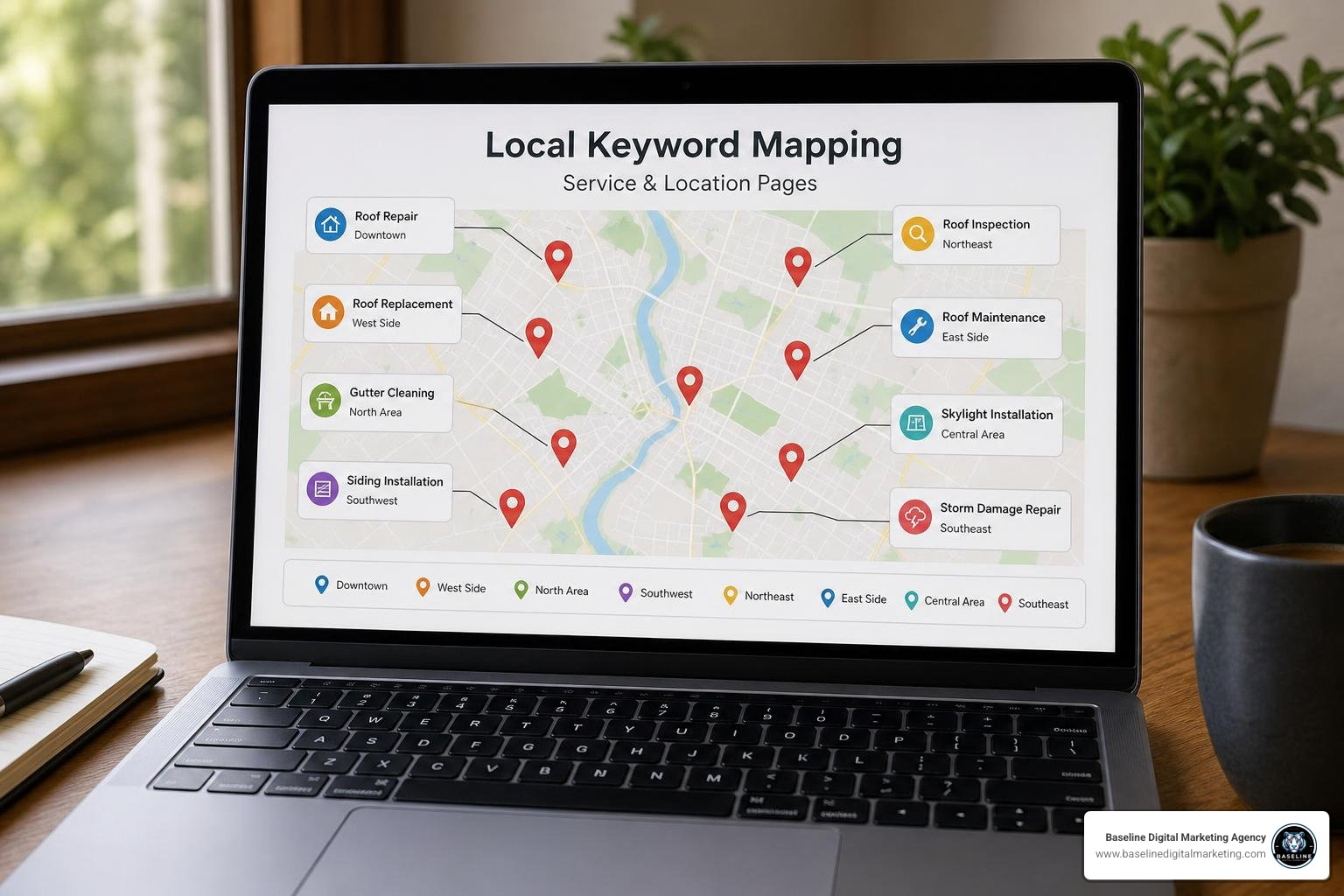
Local keyword research is how we find the phrases customers use when they are looking for nearby services, products, or businesses.
This is where a lot of companies make a mistake. They build pages around what they call their services internally, not what customers actually search.
A good local SEO strategy connects:
- The service people need
- The location or service area they care about
- The intent behind the search
- The page most likely to satisfy that intent
For a broader 2026 roadmap, this local SEO strategy guide covers many of the current tactical priorities. If your business sells products online as well as locally, our ecommerce SEO audit checklist can help you connect local visibility with product-led search.
Identifying Keywords with Local Intent
Local intent keywords usually fall into a few buckets:
Service + location
- “roof repair near me”
- “family dentist in [city]”
- “emergency plumber [service area]”
Service + modifier
- “best”
- “near me”
- “open now”
- “same day”
- “affordable”
- “licensed”
Problem-based searches
- “water heater leaking”
- “tooth pain emergency”
- “AC not cooling”
Brand or category searches
- “coffee shop”
- “law firm”
- “auto repair”
Discovery searches
- Searches where the customer has not chosen a business yet.
Local keyword research should include search volume, but volume is not everything. Many high-intent local keywords have low reported volume because tools do not always capture small-area searches accurately.
We look for clues like:
- Does Google show a map pack?
- Are local businesses ranking organically?
- Do search results change based on location?
- Are “near me” or city modifiers suggested?
- Are competitors building pages for the term?
If yes, local intent is likely present.
Creating Location-Specific Content and Schema Markup
Location-specific content helps search engines and customers understand where you operate and what you offer there.
A strong local landing page should include:
- A clear service or location focus
- Unique, useful content
- NAP information where appropriate
- Service details
- FAQs
- Testimonials or review excerpts if allowed and accurate
- Internal links to related services
- A clear call to action
- LocalBusiness or relevant schema markup
Avoid thin “city-swap” pages where only the location name changes. Google has become much better at identifying doorway-style pages that add no real value.
Instead, make pages genuinely useful. Include location-specific service details, common customer needs, project examples, team information, directions, parking details, service boundaries, or locally relevant FAQs where applicable.
Internal linking also matters. Your best local pages should not be buried three clicks deep with no links pointing to them. Our guide to an internal linking audit explains how to find hidden opportunities inside your existing site.
Schema markup can also help search engines understand your business entity. Common local schema types include:
- LocalBusiness
- Organization
- Service
- FAQPage
- Review, when used correctly and in compliance with guidelines
- BreadcrumbList
Use JSON-LD when possible, and make sure your schema matches your visible page content and Google Business Profile details.
Local Link Building and Authority Signals
Backlinks still matter, but local link building is different from generic link building.
You do not need thousands of random links. You need relevant, trustworthy signals that show your business is part of a real market, industry, or community.
Good local link sources include:
- Local business associations
- Chambers of commerce
- Sponsorship pages
- Local news mentions
- Industry directories
- Partner websites
- Supplier or vendor pages
- Event pages
- Scholarship or community program pages
- Local resource guides
The best local links often come from real relationships. Sponsor an event. Partner with another business. Host a workshop. Contribute expert commentary. Create something useful enough that local organizations want to reference it.
What should you avoid?
- Spammy link networks
- Irrelevant guest post farms
- Paid links disguised as “authority placements”
- Exact-match anchor text abuse
- Directory blasts with no quality control
A local backlink from a trusted, relevant organization can be worth far more than dozens of weak links from unrelated sites.
How AI and GEO Impact Local Search
AI search is changing how customers discover businesses. People now ask tools like ChatGPT, Perplexity, Gemini, and Google’s AI features more conversational questions, such as:
- “Who is the best contractor near me for a small renovation?”
- “What local dentist has good reviews and weekend hours?”
- “Which agency can help my business show up in search and maps?”
This is where Generative Engine Optimization, or GEO, overlaps with local SEO.
AI systems tend to favor businesses that are easy to understand, consistently mentioned, well-reviewed, and clearly associated with services and locations. That means your entity signals matter.
To improve AI visibility, focus on:
- Clear service descriptions
- Strong About and service pages
- Consistent business information
- Reviews with specific service language
- Structured data
- Authoritative mentions
- FAQ content written in natural language
- Content that directly answers customer questions
More than half of consumers now consult social media platforms for local business recommendations, too. So local visibility is no longer just “rank in Google.” It is search everywhere: Google, Maps, AI tools, social platforms, directories, and review sites.
Advanced Tactics to Boost Your Local SEO Rankings
Once the foundation is in place, these advanced tactics can help you move faster:
Improve review velocity
- Ask every satisfied customer.
- Build review requests into your workflow.
- Keep it steady and natural.
Fight spam
- Report fake listings, keyword-stuffed names, and ineligible profiles.
- Spam fighting can be especially powerful in competitive local packs.
Refresh photos regularly
- New photos show activity.
- Add team, project, product, and location images when relevant.
Use cross-promotions
- Partner with complementary local businesses.
- Create co-branded resources or events.
- Earn mentions and links naturally.
Optimize for hours-based searches
- Keep business hours and holiday hours updated.
- If you offer emergency, weekend, or after-hours services, make that clear where accurate.
Strengthen service pages
- Local Pack rankings are not only about GBP.
- Your website still supports relevance and prominence.
Track rankings by location
- Local rankings vary by searcher position.
- Use grid-style tracking when possible.
This Google Maps and Local Pack framework is a useful reference for thinking through implementation and audit steps.
Frequently Asked Questions about Local Search
Do I need a physical address to rank in local search?
Not always, but your business model matters.
There are three common local business types:
Storefront business
- Customers visit your physical location.
- Your address is usually visible on your Google Business Profile.
Service-area business
- You travel to customers.
- You should generally hide your address if customers do not visit you there.
- You define the areas you serve inside your profile.
Hybrid business
- Customers can visit you, and you also travel to them.
- You may show your address if it is staffed and eligible.
Service-area businesses can rank in local search, but proximity still matters. Google often evaluates local relevance around the business’s verified location or service area signals. If you are trying to understand how service-area ranking works, this discussion of service-area ranking and physical addresses offers helpful context. This guide on handling local SEO without a public address is also useful for businesses that visit customers instead of receiving them at a storefront.
The key is to follow Google’s guidelines. Do not use virtual offices, fake locations, or addresses where your business is not actually eligible to operate. That shortcut can lead to suspension, and suspension is the local SEO version of stepping on a rake.
How long does it take to see results from local optimization?
It depends on your starting point and competition.
Typical timelines:
Quick improvements: 2 to 6 weeks
- Fixing hours, categories, missing services, broken citations, or obvious profile issues can produce early movement.
Moderate progress: 2 to 4 months
- Review growth, page improvements, citation cleanup, and stronger engagement often need more time.
Competitive markets: 4 to 12 months
- If competitors have years of reviews, links, content, and brand recognition, you need a sustained plan.
Local SEO is not instant, but it can compound. Every review, page, link, citation fix, and engagement signal makes the business easier for Google and customers to trust.
What is the most important ranking factor for the map pack?
There is no single factor that wins every time, but the most important starting point is usually your Google Business Profile.
Your GBP directly influences relevance through categories, services, business information, photos, and engagement. But Google still evaluates everything through the broader pillars:
- Relevance: Are you a match for the search?
- Distance: Are you close enough to the searcher or searched area?
- Prominence: Are you trusted and well-known enough to deserve the result?
If we had to prioritize, we would start with:
- Correct primary category
- Complete Google Business Profile
- Consistent review generation
- Strong local service pages
- NAP cleanup
- Quality local links
- Ongoing tracking and refinement
The businesses that win are usually not doing one magic trick. They are doing the boring, important things consistently. Annoying? A little. Effective? Very.
Conclusion
Local SEO in 2026 is about more than adding a city name to a page. It is about proving, across the web, that your business is relevant, nearby, trusted, active, and worth choosing.
The practical path looks like this:
- Build and optimize your Google Business Profile.
- Earn reviews ethically and respond like a real human.
- Keep your NAP information consistent.
- Create useful service and location pages.
- Add schema markup where it helps.
- Earn local links and brand mentions.
- Track calls, clicks, rankings, and conversions.
- Adapt for AI search and zero-click discovery.
At Baseline Digital Marketing Agency, we help businesses grow through digital strategy, SEO, AI automation, website development, and branding. If you want a partner that looks at the whole search ecosystem instead of chasing vanity metrics, we would be glad to help.
If you are evaluating partners, our guide on finding a branding agency that does not fake the data can help you ask better questions. And if you are ready to think beyond traditional rankings, explore our approach to Search Everywhere Optimization.
Local customers are already searching. The real question is whether they are finding you or your competitors.